Reasons to have a primary care provider (PCP)

1 in 4 Americans don’t have a PCP. If that’s you, here are the reasons to find yours now.
With so many options for care — urgent care centers, telehealth, walk-in clinics — having a primary care provider (PCP) may seem old-school. The truth is, having a PCP has been shown to keep you healthier as you age. That’s true even if you’re young and feel well, says Scott Kaiser, MD. Dr. Kaiser is a family physician in Santa Monica, California.
And yet the number of Americans who have a PCP keeps going down. That’s especially true among people in their 30s, 40s, and 50s. For instance, one study found that 71% of Americans in their 30s had a PCP in 2002. By 2015, only 64% had one.
Are you one of the many who don’t have a PCP? If so, here are 5 reasons to find yours now.
1. You’re more likely to stay up to date on your medical care.
A recent study found that people with a PCP are more likely to:
- Fill their prescriptions
- Have a yearly checkup
- Get screened for common health issues such as cancer
There are a few reasons for this. PCPs often follow up with patients or send reminders. This can lead to more prescriptions filled. And PCPs are more likely to suggest yearly health screenings than specialists. (Specialists often don’t handle issues outside their areas of focus.)
2. A PCP can help you manage chronic health conditions.
Do you have a long-term health issue, like cancer or diabetes? If so, you know it can be hard to handle on your own. That’s where a PCP comes in.
Your PCP can help you find a specialist who knows more about your condition. Say you have a heart condition. You might need to see a cardiologist, or heart specialist. Because your PCP knows your medical history so well, they can help you find the heart doctor who best meets your needs.
“Your primary care provider is like the quarterback,” says Dr. Kaiser. “He talks to all of your doctors and comes up with a game plan.”
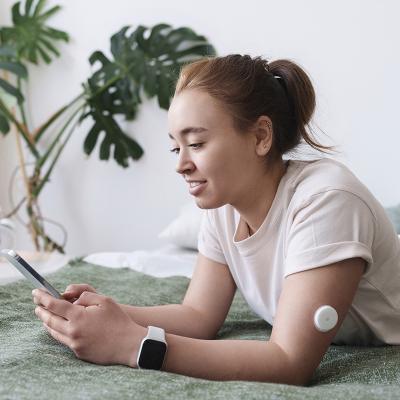
Our free app makes navigating a diagnosis easier
You have access to no-cost programs for managing diabetes, cancer, COPD, and more through the Wellframe app. Get started today with access code: cncstartwsqb.
3. A PCP can keep track of your medicines.
About 70% of all Americans take at least one prescription drug a day. Nearly 1 in 4 take four or more a day. And there’s always a chance of side effects, especially when drugs interact with one another.
But if you have a PCP, they can work with your pharmacist to keep track of all your medications. They keep an eye on you for any side effects. And your PCP can talk to your specialists, if needed, about:
- Tweaking doses
- Switching brands
- Stopping a drug entirely
4. You’ll save money.
U.S. adults who have a PCP spend about a third less on health care costs than adults who don’t. That might not make sense at first. It seems like you’d be spending more on doctor visits, right? But in fact, if you have regular checkups, your PCP can help you manage health conditions that might otherwise spiral. That can stop you from needing more pricey tests and visits. It can even prevent a hospital stay. And it makes it less likely that you’ll end up at an urgent care clinic or ER for common ailments such as a sore throat or cough, which could cost you much more.
5. You’ll catch health issues earlier.
Your PCP can provide one-stop preventive care. Through regular screenings, they can help you catch illnesses early, when they’re often easier to treat. Screenings can also help you steer clear of health issues down the road.
A good PCP also asks all the right questions during visits. It helps them flag a potential problem, says Dr. Kaiser. They can also respond quickly to messages through patient portals.
So you want a PCP. What next?
If you’re convinced it’s time you got a PCP, great! The next step: finding one that’s right for you. Your Wellframe app makes it easy.
Wellframe is included with your plan at no extra cost. It can connect you with a care advocate through secure chat. They can search for a provider who is in-network and a good fit for your needs. The care advocate can also make sure the provider is taking new patients. That could save you a lot of time and stress now — and for years to come.
Sources
-
Levine DM, Linder JA, and Landon BE. “Characteristics of Americans with Primary Care and Changes Over Time, 2002-2015.” JAMA Internal Medicine. December 16, 2019; vol. 180, no. 3: pp. 463-466. https://jamanetwork.com/journals/jamainternalmedicine/fullarticle/2757495
-
Tamblyn R, Eguale T, Huang A, et al. “The Incidence and Determinants of Primary Nonadherence with Prescribed Medication in Primary Care.” Annals of Internal Medicine. April 21, 2014; vol. 160, no. 7: pp. 441-450. https://pubmed.ncbi.nlm.nih.gov/24687067
-
Levine DM, Landon BE, and Linder JA. “Quality and Experience of Outpatient Care in the United States for Adults with or without Primary Care.” JAMA Internal Medicine. January 28, 2019; vol. 179, no. 3: pp. 363-372. https://jamanetwork.com/journals/jamainternalmedicine/fullarticle/2721037
-
“A Growing Number of Americans Report Taking Prescription Medications Daily.” Civic Science. January 11, 2023. https://civicscience.com/a-growing-number-of-americans-report-taking-prescription-medications-daily
-
America’s Health Rankings Annual Report 2019. United Health Foundation. https://assets.americashealthrankings.org/app/uploads/ahr_2019annualreport.pdf